Hospital Furniture Color Selection: Why is it Important?
Hospital Furniture Color Selection:
Why is it Important?
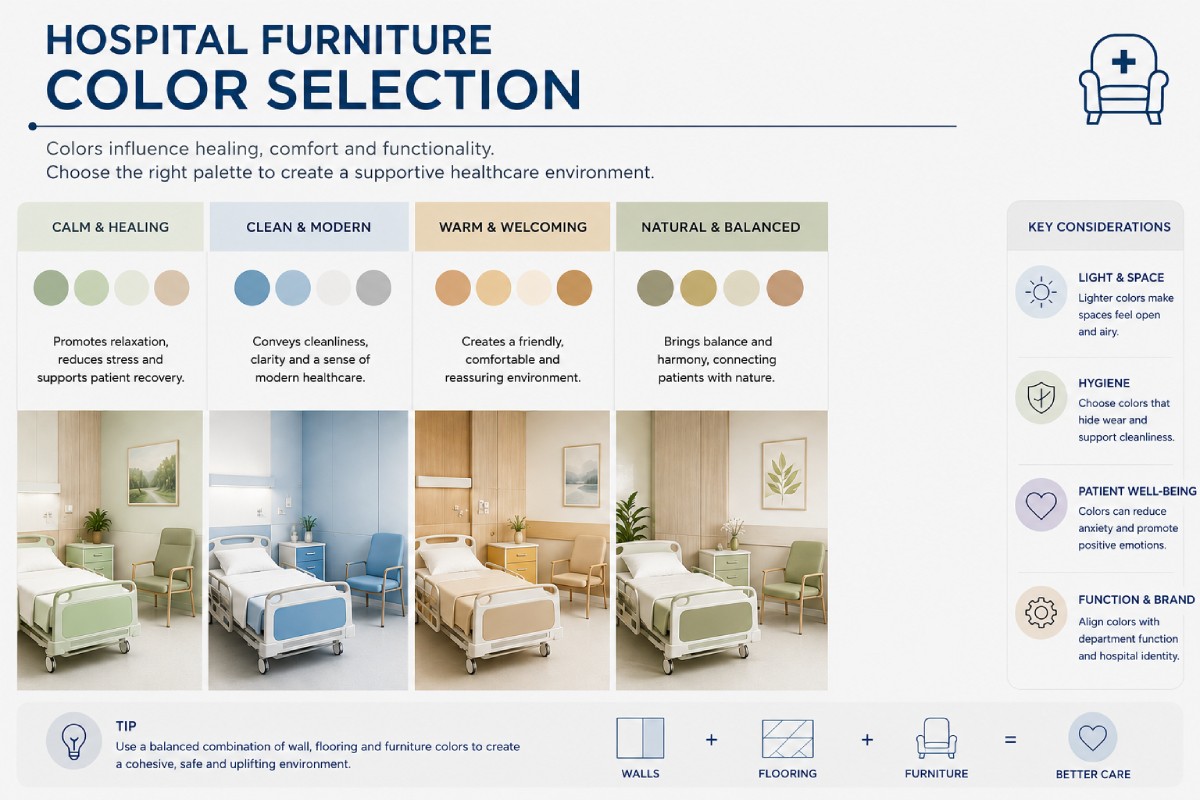
When we think about hospital furniture, we often focus on functionality — adjustability, durability, ease of cleaning. But there is one factor that quietly shapes everything from patient recovery to staff productivity: color. The colors chosen for hospital beds, cabinets, bedside tables, and ward furniture are not just aesthetic decisions. They are clinical ones.
This blog explores why color selection in hospital furniture matters — and what facility planners, procurement teams, and healthcare designers need to consider.
1. Color Affects Patient Psychology and Recovery
Hospitals are inherently stressful environments. Patients experience anxiety, fear, and discomfort — and the surrounding environment plays a measurable role in how they feel. Research in evidence-based design consistently shows that color in healthcare settings influences:
- Anxiety levels — soft blues and greens are clinically associated with calm and reduced stress
- Pain perception — warm neutrals in recovery rooms help patients feel less clinical isolation
- Sleep quality — muted tones in ward furniture reduce visual stimulation, supporting rest
- Mood and cooperation — welcoming colors in pediatric units reduce fear in children and ease treatment compliance
Stark white or cold gray furniture, while traditional, can increase the perceived harshness of a hospital environment — extending the emotional burden on patients, particularly in long-stay wards.
2. Color Supports Infection Control and Hygiene Visibility
In clinical settings, what you can see matters as much as what you clean. Color directly impacts hygiene management:
- Light-colored furniture surfaces — whites, off-whites, light grays — make stains, soiling, and contamination immediately visible, prompting timely cleaning
- Very dark surfaces may visually mask contamination, creating a false sense of cleanliness — a serious risk in ICUs and surgical prep areas
- Color-consistent furniture across a ward helps staff quickly identify any surface that is out of standard condition
From a procurement standpoint, this means color choice must align with cleaning protocols and the types of disinfectants used. Certain coating colors are also more resistant to discoloration under repeated chemical cleaning — an important long-term durability factor.
3. Color Enables Ward Differentiation and Navigation
Large hospital facilities often struggle with wayfinding — for patients, visitors, and even staff. Color-coded furniture is a practical solution:
- ICU vs. general ward vs. pediatric unit can each carry a distinct furniture color palette
- Emergency departments benefit from high-contrast, easily identifiable furniture zones
- Color coding reduces cognitive load for staff, particularly during night shifts or emergencies when quick visual recognition is critical
This is not just about aesthetics — it is a functional system design choice that improves operational efficiency and patient safety.
4. Different Wards Require Different Color Strategies
There is no single "hospital color." Each ward type has unique needs:
- Pediatric wards — bright, playful tones reduce fear and create a child-friendly atmosphere. Studies show children respond more positively to treatment in colorful environments
- Psychiatric and mental health wards — muted, cool tones are standard. Reds and high-saturation colors are avoided as they can increase agitation
- Geriatric wards — warm tones with high contrast. Elderly patients often experience reduced color discrimination and depth perception, making contrast essential for safety
- ICUs and critical care — clinical neutrals with visible hygiene surfaces. The priority is cleanliness visibility and staff efficiency
- Maternity wards — soft, warm palettes support emotional comfort during a vulnerable period
5. Color Reduces Staff Fatigue
Healthcare staff spend long hours under artificial lighting in high-pressure environments. Furniture color contributes to their wellbeing too:
- Mid-tone neutrals reduce eye strain compared to stark white surfaces under fluorescent lighting
- Harmonious color schemes across a ward reduce visual chaos, helping staff maintain focus
- Color-coded systems reduce decision fatigue by providing instant visual information
Investing in the right furniture colors is, in part, an investment in staff retention and performance.
6. Color Communicates Quality and Trust
For hospital administrators and procurement teams, furniture color is also part of the institution's brand environment. When patients and families enter a ward, the visual coherence of the space — including furniture — signals professionalism, care, and quality.
7. Practical Considerations When Selecting Furniture Colors
When evaluating hospital furniture, consider the following before finalizing color specifications:
- Ward type and patient demographic — match color strategy to clinical and psychological needs
- Lighting conditions — natural vs. artificial light changes how colors appear; always evaluate swatches under ward lighting
- Cleaning agent compatibility — ensure the finish coating withstands the disinfectants used in your facility without fading or degradation
- Maintenance visibility — lighter tones show wear and contamination sooner, supporting hygiene protocols
- Supplier flexibility — choose manufacturers that offer ward-specific color configurations rather than one-size-fits-all options
Conclusion
Color in hospital furniture is not decoration. It is a clinical tool — one that affects patient outcomes, staff efficiency, infection control, and institutional reputation. As hospitals evolve from purely functional spaces into healing environments, the thoughtfulness behind every design choice — including furniture color — becomes a measure of the quality of care itself.
At KRAFT, we understand that hospital furniture is more than equipment — it is part of the patient healing experience. From soothing color combinations that create a calm environment to durable powder-coated finishes designed for hygiene and long-term performance, KRAFT hospital furniture is developed with both functionality and patient comfort in mind. Our focus on ergonomic design, modern aesthetics, and healthcare-specific requirements helps hospitals create spaces that feel safer, cleaner, and more reassuring for patients, caregivers, and medical staff alike.
Whether you are equipping a new facility or upgrading an existing ward, partnering with KRAFT gives healthcare institutions the advantage of combining clinical practicality with thoughtful design — delivering better patient environments and elevating the overall standard of care.

Fowler Bed with Mattress: A Complete Buying Guide for Hospitals and Home Care
Hospital Furniture Color Selection: Why is it Important? When we think about hospital ...

General
Why do hospital beds have side rails and why are hospital bed side rails removable?
Hospital Furniture Color Selection: Why is it Important? When we think about hospital ...

General
What makes Single function Semi-automatic Motorized bed stand out in the Market?
Hospital Furniture Color Selection: Why is it Important? When we think about hospital ...

General
Hospital Beds with Wheels — Why Castors Matter More Than You Think
Hospital Furniture Color Selection: Why is it Important? When we think about hospital ...

General
Manual Hospital Beds in India: Why They Still Dominate Healthcare
Hospital Furniture Color Selection: Why is it Important? When we think about hospital ...

General
The Importance of Ergonomic Hospital Bed Design
Hospital Furniture Color Selection: Why is it Important? When we think about hospital ...

General
How to Increase Customer Experience in the Healthcare Sector with KRAFT Solutions
Hospital Furniture Color Selection: Why is it Important? When we think about hospital ...

General
Hospital Bed Capacity: Rural Areas vs Urban Areas — Why the Gap Matters and How to Close It
Hospital Furniture Color Selection: Why is it Important? When we think about hospital ...

General
How to Assemble, Set Up, and Maintain Hospital Beds
Hospital Furniture Color Selection: Why is it Important? When we think about hospital ...

General
Why Is It Important to Meet Us at Medicall Expo Every Year ?
Hospital Furniture Color Selection: Why is it Important? When we think about hospital ...

General
FAQ for Hospital Bed
Hospital Furniture Color Selection: Why is it Important? When we think about hospital ...

General
What to Do When a Motorized Hospital Bed Stops Working: A Step-by-Step Guide
Hospital Furniture Color Selection: Why is it Important? When we think about hospital ...

General
What Else Should You Order Apart from a Hospital Bed for a Homecare Patient?
Hospital Furniture Color Selection: Why is it Important? When we think about hospital ...

2 Function Hospital bed – A detailed preview
Hospital Furniture Color Selection: Why is it Important? When we think about hospital ...

KRAFT 144 – The Ideal Single-Function Hospital Bed for Ward & Home Care
Hospital Furniture Color Selection: Why is it Important? When we think about hospital ...

General, General
India Hospital Furniture Market Overview
Hospital Furniture Color Selection: Why is it Important? When we think about hospital ...

General
Complete Guide to Choosing the Right Hospital Furniture for Your Healthcare Facility
Hospital Furniture Color Selection: Why is it Important? When we think about hospital ...

General
Recliner Bed for Patient Care at Home
Hospital Furniture Color Selection: Why is it Important? When we think about hospital ...

The History of Hospitals: From Ancient Healing Places to Modern Medical Institutions
Hospital Furniture Color Selection: Why is it Important? When we think about hospital ...

General
Common Issues in Hospital Beds and How to Fix Them
Hospital Furniture Color Selection: Why is it Important? When we think about hospital ...
General
Hospital Food Table / Tray / Trolley for Patients
Hospital Furniture Color Selection: Why is it Important? When we think about hospital ...

General
Rent or Buy a Hospital Bed – Which is Better?
Hospital Furniture Color Selection: Why is it Important? When we think about hospital ...

General
Adjustable Medical Beds for Elderly and Bedridden Patients at Home
Hospital Furniture Color Selection: Why is it Important? When we think about hospital ...

General
Hospital Bed Mattresses in Chennai – A Buyer’s Guide by KRAFT Supplier, Tamil Nadu
Hospital Furniture Color Selection: Why is it Important? When we think about hospital ...

General
Advantages of Hospital Beds in Home
Hospital Furniture Color Selection: Why is it Important? When we think about hospital ...

General
Hospital Bed Price in India: A Complete Guide
Hospital Furniture Color Selection: Why is it Important? When we think about hospital ...

General
Why ‘Where Can I Buy a Hospital Bed Near Me?’ Is No Longer Important
Hospital Furniture Color Selection: Why is it Important? When we think about hospital ...

General
CSR in Action: 1 Bed for 1000 People – Bridging India’s Critical Healthcare Infrastructure Gap
Hospital Furniture Color Selection: Why is it Important? When we think about hospital ...

General
Discover the Benefits of Vertical and Horizontal Autoclave Hospital Machines with Us – Trusted Manufacturers in Chennai
Hospital Furniture Color Selection: Why is it Important? When we think about hospital ...

General
Revolutionizing Patient Recovery: ICU Beds with Built-in Weighing Scales
Hospital Furniture Color Selection: Why is it Important? When we think about hospital ...

General
Artificial Intelligence in Medicine: The Future of Healthcare is Here
Hospital Furniture Color Selection: Why is it Important? When we think about hospital ...

General
The Vital Importance of Emergency Crash Carts in Hospitals
Hospital Furniture Color Selection: Why is it Important? When we think about hospital ...

General
How to Prevent Bed Sores in Bedridden Patients- Methods & Care Product
Hospital Furniture Color Selection: Why is it Important? When we think about hospital ...

General
GBS Outbreak in Recent News: What You Need to Know
Hospital Furniture Color Selection: Why is it Important? When we think about hospital ...

General
The health benefits of chocolate
Hospital Furniture Color Selection: Why is it Important? When we think about hospital ...

General
How to stay safe and also free from anxiety in times of Corona Virus
Hospital Furniture Color Selection: Why is it Important? When we think about hospital ...

Weight gain during pregnancy - What to expect when you’re expecting
Hospital Furniture Color Selection: Why is it Important? When we think about hospital ...

General
What Is Antenatal Yoga? How Can You Pick A Good Antenatal Class?
Hospital Furniture Color Selection: Why is it Important? When we think about hospital ...

India - A Fast Growing Medical Touring Hub
Hospital Furniture Color Selection: Why is it Important? When we think about hospital ...

General
Getting pregnant with a low sperm count - it is possible!
Hospital Furniture Color Selection: Why is it Important? When we think about hospital ...

General
3 Incredible Ways Virtual Reality Is Changing The Medical Industry
Hospital Furniture Color Selection: Why is it Important? When we think about hospital ...

General
Getting Pregnant with Irregular Cycles - Is it Possible?
Hospital Furniture Color Selection: Why is it Important? When we think about hospital ...

General
The Rise of Wearable Tracking Devices
Hospital Furniture Color Selection: Why is it Important? When we think about hospital ...

General
The Health Risks of Late Pregnancies
Hospital Furniture Color Selection: Why is it Important? When we think about hospital ...

General
Telehealth - A Stepping Stone to a Better Future
Hospital Furniture Color Selection: Why is it Important? When we think about hospital ...

General
Technology Advancements are Transforming the Entire Healthcare Industry
Hospital Furniture Color Selection: Why is it Important? When we think about hospital ...

General
Skip Dinner. Lose Weight.
Hospital Furniture Color Selection: Why is it Important? When we think about hospital ...

General
Optogenetics- Understanding the Human Brain
Hospital Furniture Color Selection: Why is it Important? When we think about hospital ...

General
Online Information through EHR and EMR
Hospital Furniture Color Selection: Why is it Important? When we think about hospital ...

General
Mobile Health App Adoption
Hospital Furniture Color Selection: Why is it Important? When we think about hospital ...